


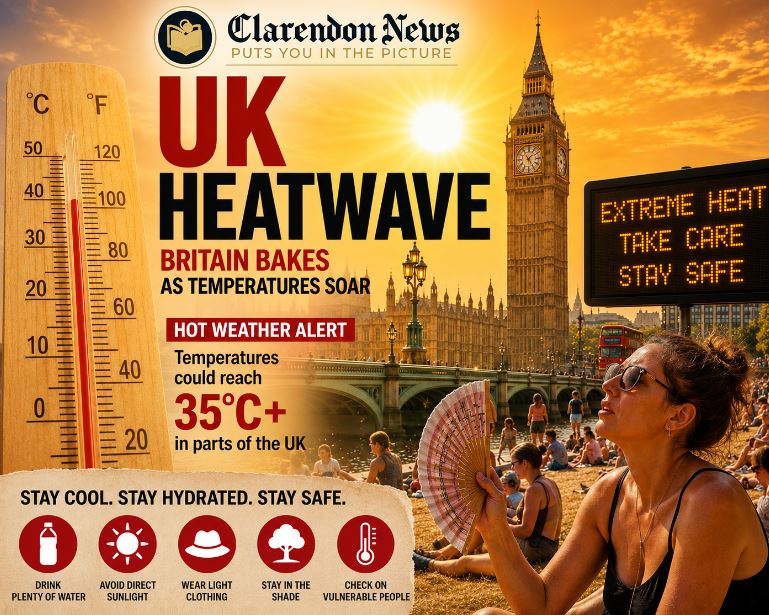
The United Kingdom is once again facing soaring temperatures as another summer heatwave grips large parts of England, Wales, and portions of Scotland. Meteorologists have forecast temperatures climbing well above seasonal averages, prompting public health agencies and local authorities to issue warnings about heat-related illnesses, wildfire risks, and increasing pressure on water supplies.
Experts say the latest heatwave is part of a broader trend of increasingly frequent and prolonged periods of extreme weather, raising fresh questions about climate resilience and infrastructure across the country.
High Temperatures Affect Millions
Several regions across southern and central England have experienced temperatures exceeding 30°C (86°F), while forecasts suggest that some areas could approach even higher temperatures if current weather patterns continue.
Health officials have advised residents, particularly older adults, young children, and individuals with underlying medical conditions, to take precautions by staying hydrated, avoiding prolonged exposure to direct sunlight, and checking on vulnerable family members and neighbours.
Outdoor workers are also being encouraged to take regular breaks and avoid strenuous activity during the hottest parts of the day.
Growing Concerns Over Water Supplies
Alongside the rising temperatures, water companies are closely monitoring reservoir levels and river flows. Extended periods of dry weather have increased pressure on water resources in several regions.
Some local authorities have urged households to use water responsibly by reducing unnecessary outdoor water use, including excessive lawn watering and car washing. While mandatory restrictions vary depending on local conditions, officials say conservation efforts can help reduce pressure on public water systems during prolonged dry spells.
Agricultural communities are also watching conditions carefully as dry soil affects crop growth and livestock management.
Increased Risk of Wildfires
Fire and rescue services across the UK remain on high alert as dry vegetation significantly raises the likelihood of grass and woodland fires.
Authorities have reminded members of the public to avoid lighting disposable barbecues in parks or rural areas and to dispose of cigarettes responsibly. Even small sparks can ignite dry grass during periods of extreme heat.
Emergency responders say prevention remains the most effective way to reduce wildfire incidents during the summer months.
Impact on Public Transport
High temperatures can also create challenges for Britain’s transport network.
Rail operators sometimes introduce temporary speed restrictions when tracks become excessively hot, helping reduce the risk of infrastructure damage. Road surfaces may soften under prolonged heat, while some airports monitor runway conditions during periods of extreme temperatures.
Travelers are encouraged to check schedules before departing, especially during peak heat periods.
Health Experts Stress Preparation
Medical professionals continue to emphasize the importance of recognizing the early signs of heat exhaustion, which may include:
- Dizziness
- Heavy sweating
- Muscle cramps
- Headaches
- Nausea
- Fatigue
If left untreated, heat exhaustion can develop into heatstroke, a medical emergency requiring immediate attention.
Simple preventive measures—such as drinking water regularly, wearing lightweight clothing, staying indoors during the hottest hours of the day, and using fans where available—can significantly reduce health risks.
Climate Change Remains a Long-Term Challenge
Scientists continue to study how climate change is influencing weather patterns across Europe, including the UK.
Many climate researchers suggest that while individual weather events cannot be attributed to a single cause, rising global temperatures are increasing the likelihood and intensity of extreme heat events.
Government agencies continue investing in flood defences, water infrastructure improvements, and climate adaptation strategies designed to help communities cope with increasingly unpredictable weather conditions.
What Residents Can Do
Authorities recommend that residents:
- Drink plenty of fluids throughout the day.
- Avoid strenuous outdoor activities during peak afternoon temperatures.
- Wear sunscreen and lightweight clothing.
- Keep homes cool by closing curtains during the hottest hours.
- Check on elderly neighbors and relatives.
- Follow local weather updates and official advice.
Small actions taken collectively can help reduce health risks and support community resilience during periods of extreme weather.
Looking Ahead
Forecasts indicate that above-average temperatures may continue for several days in many parts of the UK. Meteorologists will continue monitoring changing weather patterns to determine whether the heatwave will extend further into the week or be followed by cooler conditions.
While many people enjoy warmer summer weather, experts stress that prolonged heat brings real challenges for public health, water management, agriculture, and infrastructure. Preparing in advance and following official guidance remain the best ways to stay safe during periods of extreme heat.
Frequently Asked Questions
How hot is the UK expected to get?
Temperatures above 30°C are expected in several regions, with some locations potentially experiencing even higher readings depending on local weather conditions.
Why are officials concerned about water supplies?
Extended dry weather reduces reservoir levels and river flows, increasing pressure on public water systems and agriculture.
Who is most at risk during a heatwave?
Older adults, infants, young children, people with chronic illnesses, and those working outdoors are generally at greater risk of heat-related illnesses.
How can people stay safe?
Stay hydrated, avoid direct sunlight during the hottest part of the day, wear light clothing, and monitor local weather advisories.
 Total views : 106000