


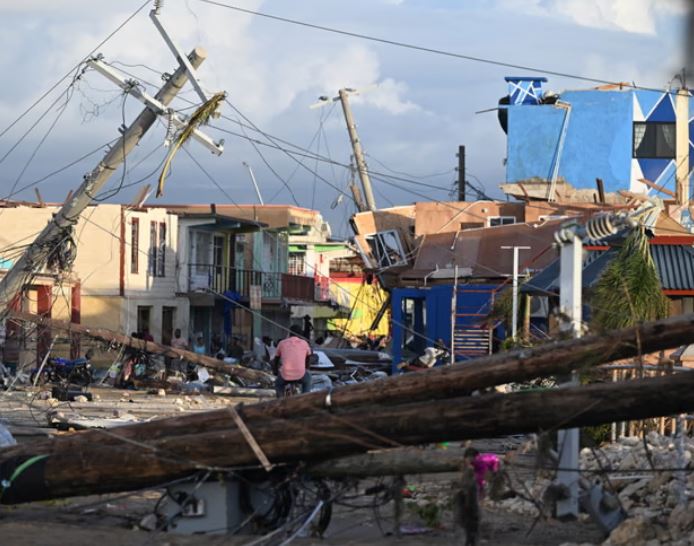
Photograph: Ricardo Makyn/AFP/Getty Images
Hurricane Miriam—often misreported as Melissa—was a record-shattering Category 5 storm that hit Jamaica in late October 2025, causing devastation on a scale never seen before in the island’s history. This blog explores Jamaica’s preparations, the harrowing impact of the hurricane, and the ongoing recovery efforts, combining both pre- and post-landfall perspectives.
Jamaica before Hurricane Miriam
In the days leading up to landfall, meteorologists began issuing dire warnings as Miriam formed over abnormally warm Caribbean waters, rapidly intensifying and prompting emergency preparedness measures. Prime Minister Andrew Holness publicly urged residents to evacuate flood-prone and low-lying areas, and ordered schools to transition to online instruction. Local agencies, including the Office of Disaster Preparedness and Emergency Management (ODPEM), coordinated shelter activation, infrastructure safeguarding, and community-level readiness.
– More than 13,000 people crowded into government storm shelters.
– Emergency budgets and insurance provisions totalling $33 million were announced.
– National agencies worked to ensure critical infrastructure (hospitals, water, and electricity) could withstand the impending storm.
The atmosphere was tense yet resolute—Jamaicans braced themselves for what meteorologists warned could be the “biggest hurricane in recorded Jamaican history,” with potential rainfall of 102 cm in a few hours and winds expected to exceed 180 mph.
Miriam’s Landfall and Immediate Impact
Hurricane Miriam made landfall on October 28, 2025, striking the south-western parishes of Jamaica—mainly St. Elizabeth and Westmore—with sustained winds reaching 185 mph and a catastrophic storm surge. In mere hours, much of western Jamaica was underwater, with scenes described as “total devastation” by Prime Minister Holness.
– Over 500,000 residents lost power, with 72% of mobile networks knocked out.
– The only public hospital in St. Elizabeth lost power, suffering significant damage.
– Roads were washed away, bridges destroyed, and communication networks crippled.
– Flash floods and mudslides buried communities; residents clung to rooftops for hours.
– The breadbasket region of Jamaica was decimated, with crops wiped out.
Satellite images in the aftermath showed swathes of towns flooded, roofs torn off, and the landscape fundamentally altered. Emergency aid was airlifted into isolated regions; food, water, and medicine became immediate priorities.
Aftermath: Losses, Recovery, and Resilience
In the days and weeks after Hurricane Miriam, the full scope of devastation became clear. At least 32 people lost their lives in Jamaica, among nearly 50 across the region. More than 100,000 housing structures were damaged, leaving thousands homeless. Entire towns and rural communities were cut off, and at least 30 remain inaccessible even weeks later.
Economic and Infrastructural Impact
– Jamaica suffered economic losses equivalent to 30% of its entire GDP—between £5.8 and £7 billion.
– At least five million metric tonnes of debris were generated (roughly 500,000 truckloads).
– Short-term economic output is expected to decline by 8–13%.
– 80% of roofs in the west were destroyed; the national power grid was rendered non-functional.
Government and International Response
– Jamaica’s largest-ever hurricane recovery plan was put into action, with the IFRC launching an emergency appeal of £17.9 million and the IMF allocating £608 million in resources to kick-start rebuilding.
– Relief flights and helicopters delivered supplies to stranded communities.
– The government prioritized rebuilding critical infrastructure—roads, power lines, drainage, and housing.
Humanitarian Crisis
– 36,000 people are in urgent need of food assistance; livelihoods and homes destroyed.
– Agricultural regions lost their harvest, spurring worries about future food sufficiency.
– Psychosocial support for survivors, especially those who endured hours of terror in makeshift shelters, became a government focus.
Building Future Resilience
The event underscored Jamaica’s vulnerability to climate-driven super storms. Recovery plans now stress “climate-smart” infrastructure and nature-based solutions to ensure livelihoods can withstand future hurricanes. “What happened with Miriam was catastrophic,” said Keenan Falconer of the IMF, “but will not be the last such event faced by Jamaica.” Reconstruction will take years, supported by a mix of international aid, loans, and revenue.
Conclusion
The story of Hurricane Miriam in Jamaica is one of resilience in the face of unprecedented destruction. The tragedy exposed weaknesses in infrastructure but also rallied local communities, government, and international partners around a collective effort—relief, recovery, and renewal. As Jamaica rebuilds, Miriam stands as a cautionary tale and a catalyst for a climate-resilient future.
Reuters, BBC
 Total views : 106614